Swords · Four · Air
Four of Swords
Lay the swords down for a while. Rest is part of the work.
How it feelsQuiet, drained, slowly settling.
What it asks of youA still mind thinks more clearly. Give yourself real rest.
Upright
- rest
- stillness
- time out
- recharging
- reflection
Reversed
- restlessness
- running on empty
- rest cut short
- slow return
- drifting
The picture
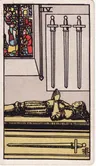
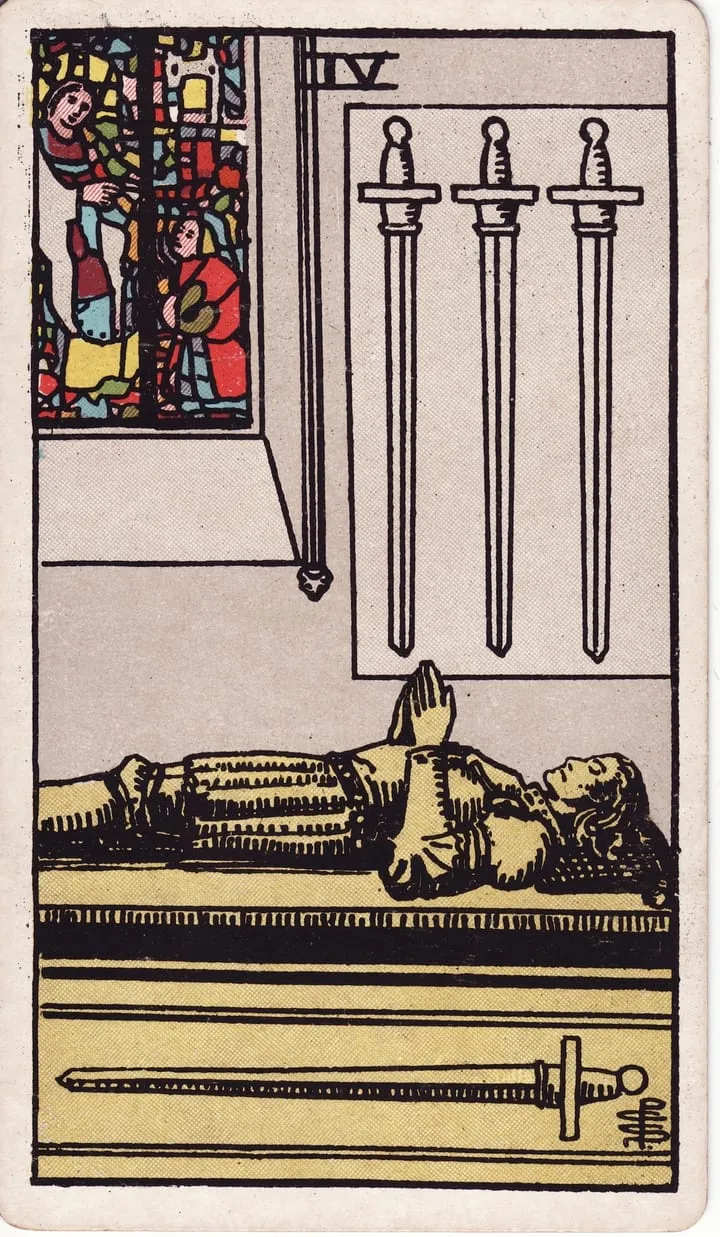
Inside a quiet, pale building, a carved figure of a knight in armor lies at full length on top of a tomb, eyes closed, palms pressed together on the chest. Three swords hang on the wall above, points down. A fourth sword lies flat along the side of the tomb. In the upper left corner is a window of colored glass showing two figures, one bending toward the other. Nothing moves.
Waite describes “The effigy of a knight in the attitude of prayer, at full length upon his tomb.”
Meaning
The Four of Swords is the card of rest. Swords are the suit of the mind, and a mind can only carry so much before it needs to set things down. In the picture, everything that could cut is hung up or laid flat. The knight lies still, in a calm room, with nothing asked of him.
Upright, the card points to sleep, quiet and time away from pressure. Waite lists “Vigilance, retreat, solitude”, and it helps to read vigilance here as the watchful kind of resting: you are not gone, just still. This might look like a weekend with no plans, fewer screens, a long walk, or simply putting off a decision that can wait. Some readers also connect the card with meditation. Recovery is not wasted time. Ideas sort themselves out in the quiet, and you often come back seeing more than you did while pushing.
Reversed
Reversed, the rest is not working. You might be lying awake with the same thoughts going around, or telling yourself you will stop once everything is done. Tiredness that is ignored tends to take its own break, often at a bad time. For other readers, the reversal simply means the quiet season is ending and it is time to stand up again. If exhaustion has been building for a long time, take it seriously and let people around you help.
Symbols
Resting knight
A knight carved in stone, still and peaceful, hands joined on the chest. Many readers see a mind that has chosen to stop, not one that has been beaten.
Three hanging swords
Three swords hang on the wall, out of use. The struggles are not gone, but they can wait while you recover.
Sword along the tomb
One sword lies flat beside the knight, close at hand. Rest does not mean giving up your strength; it is just set down for now.
Colored window
A bright window shows two figures, one leaning toward the other. It is often read as comfort and care from outside the quiet room.
Tomb
Deep stillness, a pause rather than an end.
In context
- General: step back from the noise. The next move can wait a little.
- Love: a quieter season together, or one of you needing room to breathe. Space given kindly can bring you closer.
- Career: take the leave you have been postponing, or let a project rest before you judge it.
- Money: pause before big decisions. Nothing needs to be rushed.
- Self: when did you last rest without feeling guilty about it?
Light and shadow
- Light: calm, recovery, perspective, quiet strength.
- Shadow: withdrawing for too long, numbness, putting life on hold.
Common misreading
Reading the Four as laziness or defeat. The knight is not knocked down; he lies in an orderly place with his swords carefully put away. This is rest taken on purpose, and it is part of doing well, not a failure to try.