Swords · Nine · Air
Nine of Swords
Awake in the dark, carrying worries that may not be facts.
How it feelsAnxious, tired, alone with it.
What it asks of youWorries shrink when they are spoken aloud and checked in daylight.
Upright
- worry
- sleepless nights
- spiraling thoughts
- regret
- dread of the worst
Reversed
- relief
- sharing the load
- worry kept secret
- checking the facts
- turning a corner
The picture
A figure sits up in bed in a dark room, face hidden in both hands. Nine swords hang in level rows across the black wall behind. Their blades point across the room and never reach her. A quilt of bright squares, patterned with roses and small signs, covers her legs, and a carved panel on the side of the bed shows two figures locked in a struggle.
Waite describes “One seated on her couch in lamentation, with the swords over her.”
Meaning
The Nine of Swords is the card of the long night. Its weight lives in the mind: worry, guilt, and the loop of thoughts that grows louder when the house is quiet. Waite calls it “a card of utter desolation”, and the feeling can be that heavy. Yet the swords stay on the wall. The pain is real, and much of its force comes from the mind replaying what might happen.
Upright, the card asks you to look at the worry itself. Is it about something happening now, or something that might? Many fears look bigger in the dark and smaller once they are written down, shared or checked against the facts. Rest, routine and kind company are real help, not luxuries. Be as gentle with yourself as you would be with a friend in the same bed. If the same worry has kept you awake for weeks, or it feels like too much to carry, please reach out to someone you trust: a friend, a family member or a professional.
Reversed
Reversed, the night may be ending. You start to talk about what has kept you up, and the worry loses some of its grip once it is outside your head. The reversal can also point the other way: anxiety pushed deeper and hidden behind a calm face, so no one knows how hard things are. Ask yourself which is true. Waite’s reversed meanings include “reasonable fear”, a reminder that some concerns deserve action, not dismissal.
Symbols
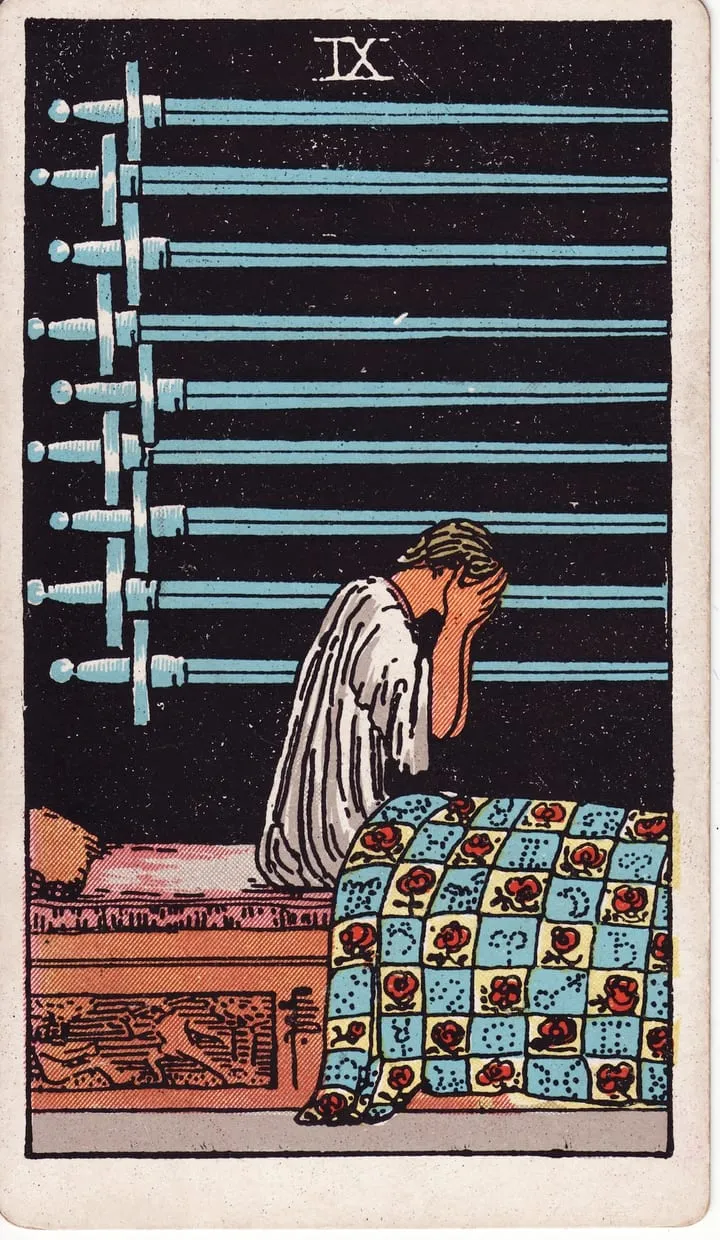
Figure in bed
She sits up with her face in her hands, awake when she would rather sleep. The pose holds grief or dread, carried alone.
Nine swords
The swords hang level across the dark wall. They fill the space around her yet never touch her, like thoughts crowding the mind.
Quilt
Roses and small signs fill the bright squares. Comfort and color are still within reach, even if she cannot see them now.
Carved panel
A struggle is carved into the bed: the conflict she keeps replaying.
Black wall
The dark behind her is night, and night always ends.
In context
- General: worry is running ahead of the facts. Write it down and look again in daylight.
- Love: fears about a relationship, or guilt over something said. A calm, honest talk often helps more than replaying it alone.
- Career: stress that follows you home. Separate the tasks you can act on from the ones you only fear.
- Money: anxiety about bills or the future. Look at the real figures, and ask someone qualified if you need advice.
- Self: what would you say to a friend lying awake with this same worry?
Light and shadow
- Light: naming fears, kindness to yourself, reaching out, rest.
- Shadow: spiraling thoughts, expecting the worst, hiding distress from others.
Common misreading
Reading the Nine as a warning that something terrible is coming. The card shows a person in distress, not a disaster. It speaks to the strain of worry and guilt, which can ease with rest, perspective and support.