Cups · Six · Water
Six of Cups
A small gift, old memories and the plain kindness of childhood.
How it feelsTender, wistful, warm.
What it asks of youA good past is a root to grow from, not a place to hide.
Upright
- nostalgia
- innocence
- kindness
- childhood
- simple giving
Reversed
- stuck in the past
- rose-tinted memories
- old wounds
- moving forward
- refusing to grow
The picture
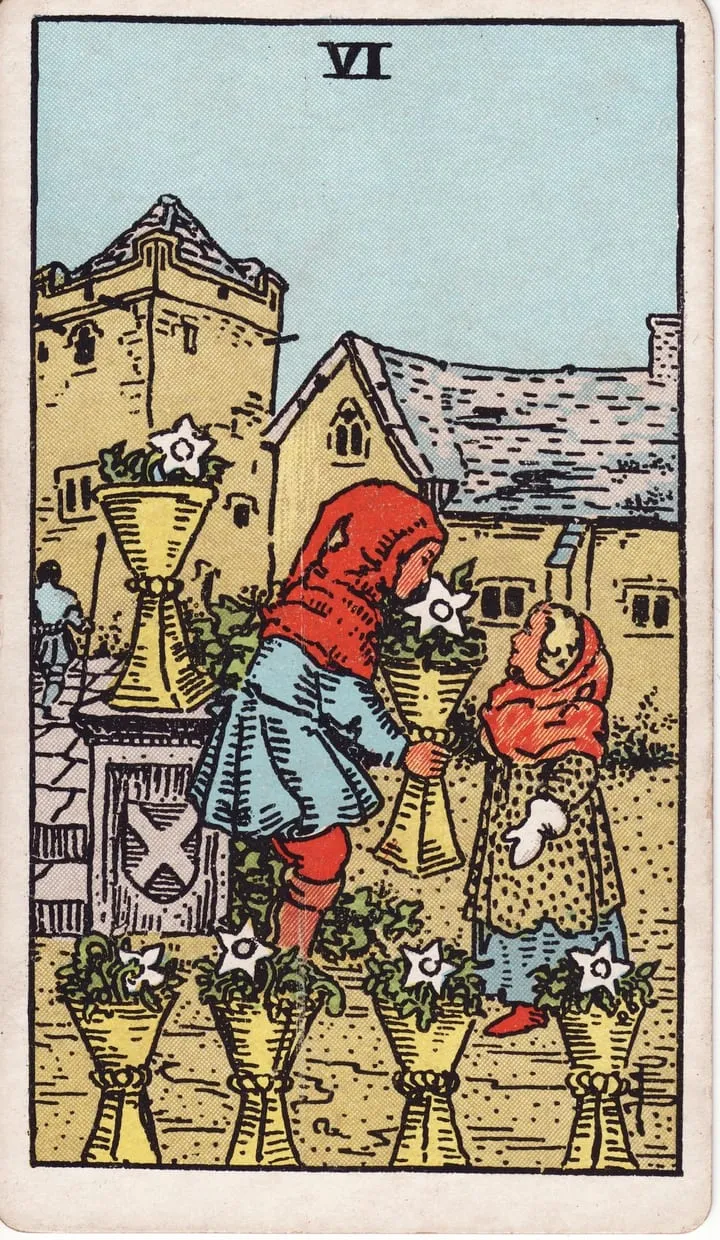
In a sunny courtyard by an old house and a stone tower, a child in a red hood leans toward a smaller child and offers a cup filled with a white flower. The smaller child wears a red headscarf and a white glove. Six cups stand around them, each holding white star-shaped flowers and green leaves: four in a row in front, one on a stone pedestal at the left, and the one being handed over. On the far left, a guard walks away along a path.
Waite describes “Children in an old garden, their cups filled with flowers.”
Meaning
The Six of Cups is the card of memory and simple kindness. After the grief of the Five, the heart turns back toward what felt safe and warm. The children are not trading or bargaining. One gives, the other receives, and that is all.
Upright, Waite calls it “A card of the past and of memories”. It may bring someone from your past to mind, a place you loved, or the person you were as a child. These memories can be healing. They remind you what you used to enjoy, how easy it once was to be kind, and that you have known safety before. The card also speaks of gentle giving in the present: small gifts, care offered freely, friendships without an agenda.
The question is how you use the past. Visiting it can refresh you. Living there, while today waits, is a different thing.
Reversed
Reversed, memory can become a hiding place. You may be holding on to an old time, an old place or an old love, and painting it brighter than it really was. Sometimes the reversal brings up something painful from childhood, an old pattern that still shapes how you act. In a gentler light, the reversed Six can mean letting go of the past and turning toward what is coming. Carry the good memories with you, but keep walking.
Symbols
Cup with a flower
The older child hands over a cup with a single white flower. It is commonly read as kindness given freely, with nothing expected back.
Child in the red hood
The giver bends toward the younger one. Many readers see care and protection, the part of you that looks after others.
Smaller child
The smaller child receives the gift, gloved hand raised. One reading: openness and trust, the part of you still able to receive.
Cups of flowers
Cups filled with flowers instead of drink. Simple pleasures, good memories, things that grew over time.
Old tower
An old building behind them: home and the past.
Walking guard
An adult walking off: the grown-up world.
In context
- General: the past or old friends may come to mind. Draw strength from good memories, and stay in the present.
- Love: you may miss an old flame or a simpler kind of love. Ask whether it feeds your life now or pulls you back.
- Career: work involving care, teaching, or a project you return to may feel meaningful.
- Money: a small gift or kindness, given or received. Keep it simple.
- Self: what did you love as a child? Is any of it still in your life?
Light and shadow
- Light: kindness, warm memories, innocence, generosity.
- Shadow: escaping into a past that looks better than it was.
Common misreading
Reading the Six as a sure sign that an ex will come back. The card is about the power of memory and gentleness. It does not promise anyone’s return.