Pentacles · Six · Earth
Six of Pentacles
Giving and receiving, and the balance of power between them.
How it feelsGrateful, generous, aware of who holds the scales.
What it asks of youGive and receive with care, so both sides keep their dignity.
Upright
- giving
- receiving help
- gifts
- fairness
- circulation
Reversed
- gifts with conditions
- uneven terms
- feeling indebted
- jealousy
- overextending
The picture
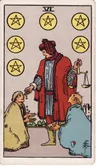
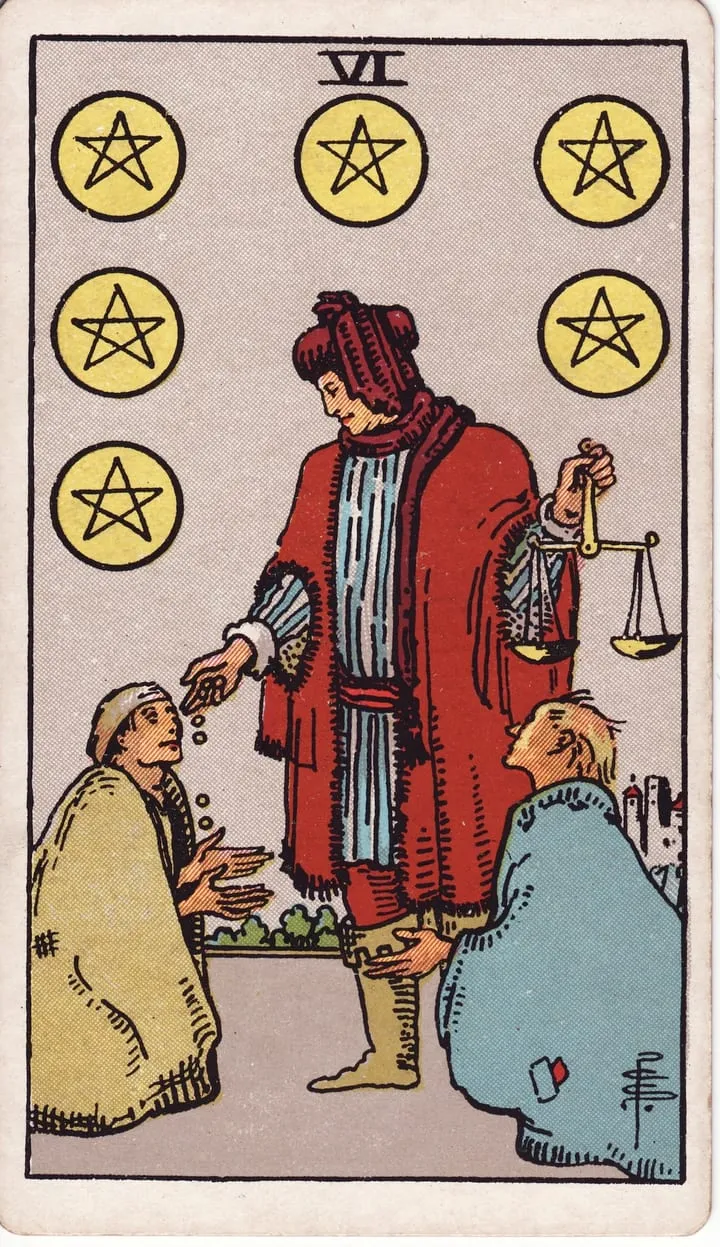
A well-dressed man in a red cloak and cap stands between two kneeling people. In his left hand he holds a pair of scales, evenly balanced. With his right hand he drops a few coins into the open hands of the person kneeling on the left. The person on the right, in a blue cloak, waits with a hand raised. Both kneeling figures wear patched clothes. Six pentacles hang in the sky above, and a small town and trees show in the distance.
Waite calls the giver “A person in the guise of a merchant”.
Meaning
The Six of Pentacles follows the hardship of the Five. Resources move again: someone who has enough shares with someone who does not. At its simplest the card is about generosity, gifts and help that arrives when it is needed. Waite reads it as “Presents, gifts, gratification”.
Upright, the card can show you on either side of the exchange. You might be in a position to help, with money, time, knowledge or a kind word. Or you might be the one receiving, and the card says that is all right. Accepting support is not a failure. The scales add an important note: the giving is measured and fair, not careless, and it fits what the giver can afford.
The picture is also honest about power. One person stands, two kneel. Even kind help can carry an imbalance. If you are giving, notice whether the help leaves the other person freer or smaller. If you are receiving, notice whether you can accept with dignity, without feeling you must repay with your independence. The healthiest exchanges move both ways over time.
Reversed
Reversed, the scales tip. A gift may come with strings attached, or help may turn into control. Debts, whether of money or of favors, can start to weigh on a relationship. Some people give until they have nothing left; others refuse all help out of pride. Waite’s reversed list includes “envy, jealousy”, the feelings that can creep in when one side always seems to have more. Look for the terms that are not being said out loud.
Symbols
Balanced scales
Held level in the giver’s hand. Fairness and measure: giving what is right for the moment, neither too little nor more than he can bear.
Falling coins
A few coins drop into open hands. Help that actually reaches the person who needs it.
Merchant
Prosperous and upright, he shares from his own success. He also holds the power to decide who receives and how much.
Kneeling figures
Two people asking for help. One is receiving now; the other still waits a turn.
Patched clothes
Patches: the need is real.
In context
- General: a fair exchange of help and resources. Give and take with care.
- Love: generosity in a relationship. Watch that it stays balanced, with neither person always the giver.
- Career: support from a mentor or employer, or a chance to help others along. Fair pay and fair credit matter.
- Money: lending, giving, receiving help. Be clear about any terms and give only what you can manage. Reflection, not financial advice.
- Self: is it easier for you to give or to receive, and why?
Light and shadow
- Light: generosity, fairness, gratitude, help that respects the person helped.
- Shadow: help used as control, keeping score, feeling superior or ashamed.
Common misreading
Reading the Six as a simple good deed with no complications. The scene is warm, but it is also carefully arranged: one person stands holding the scales, two kneel. Notice both the kindness and the imbalance.